 Skip to content
Car Repossession: Everything You Need to Know
 Tom JacksonTom Jackson
Author
Tom Jackson focuses on writing about debt solutions for consumers struggling to make ends meet. His background includes time as a columnist for newspapers in Washington D.C., Tampa and Sacramento, Calif., where he reported and commented…
View author profileFor many, keeping pace with car payments is a major budget stressor: A September 2025 report by the Consumer Federation of America showed borrowers are slipping behind at a pace not seen since just before the 2008 economic crisis.
If you’re among those routinely choosing between making rent and staying current on an auto loan, watch out: Missed payments can trigger repossession activities by your lender (or leasing company), and you might never see them coming.
If you’re on the brink of default and worried your car could disappear from your driveway or the grocery parking lot, read on. You have options … and they’re not all bad.
Types of Car Repossession
Car repossession comes in two flavors: Involuntary and voluntary. One is only slightly more palatable than the other.
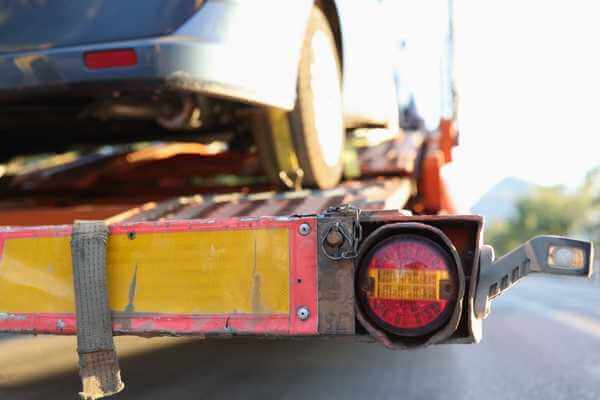
Involuntary repossession is the one depicted in the movies: The hard-luck, fist-waving motorist with the car loan gone bad, chasing his car, hooked to a tow truck, down his neighborhood street in futile protest. One last insult to a life circling the drain.
Voluntary repossession, or voluntary surrender, also involves the loss of the collateralized vehicle, but without the shock or drama. Voluntary compliance offers benefits such as avoiding certain repossession costs; it also can make you look responsible and cooperative in the eyes of future lenders.
The Car Repossession Process
The process of car repossession follows no prescribed pattern. It varies, depending on your lender or leasing company, as well as where you live. Each state has its own laws regulating repossession.
Nonetheless, most repossessions follow a general outline. If you’re at risk, here’s what you can anticipate.
How Does Car Repossession Work?
Repossession operations can begin with the first missed payment. “There’s no set number of payments missed and no standard grace period,” says certified financial planner Eric Croak, president of Toledo, Ohio-based Croak Capital. “It could be 31 days. It could be 91.”
Typically, however, lenders and leasing agencies begin repossession procedures in earnest only after three missed payments. Your loan contract or lease agreement lists the specifics.
Generally, once a car loan goes into default, lenders can direct vehicles to be physically seized, oftentimes without notice. (As noted by the Wall Street Journal [paywall], repossession work is risky enough without alerting militant borrowers they’re about to lose their vehicle.)
So, 90 days after the first payment was missed, your car could vanish at any moment. “You won’t usually get a court notice or a sheriff’s knock,” Croak says. “In most states, the lender won’t need any kind of permission to tow your car out of your driveway at 3 a.m.
“It’s legal, it’s quick, and it’s rarely announced.”
Instead, you typically will be alerted to the repossession only after the vehicle is stashed on a storage lot.
Tow truck operators — those who customarily carry out repossessions — are not allowed to “breach the peace.” That is, they cannot use or even threaten physical force. They’re also not allowed to remove the vehicle from a closed garage without permission. They also cannot damage personal property, including cutting locks or chains.
Also good to know: To simplify repossessions, some states allow lenders to install a “kill switch” in the vehicle that prevents it from being started.
While the car won’t start, repossession fees are just getting revved up. If your vehicle is seized, you could be on the hook for storage, sale preparation, prepayment penalties or early termination of the lease, and attorney fees.
Knowing this, the devil on your shoulder might urge you to hide your car. This is in every way terrible advice.
Tow truck operators use scanners to match license plates to repossession orders; parking four blocks away from home is no help. Moreover, some lenders install GPS trackers in financed vehicles. Playing hide-and-seek is not only futile, but it’s also pricy: Increasing the time and effort required to execute a legal repossession only boosts the fees you’re facing, and it could lead to criminal charges.
“No lender is going to say, ‘Yeah, you outplayed us! Have a nice car!’ ” Croak says. “You’ll still owe the debt and costs, but you’ll have added legal hassles on top. Don’t turn a financial problem into a legal one.”
Once in the lender’s or leasing agency’s possession, the car will most likely be sold, either privately or at a public auction. Some states require the lender to provide the particulars about the auction. If you want the car back, you can bid on it.
Meanwhile, you have a right to reclaim — in a timely manner — whatever personal items were in the vehicle at the time it was taken. Some states require lenders to disclose which personal items were found and how to retrieve them.
Other options for reclaiming the car include buying it in a private sale or reinstating your loan.
If the lender/lessor can’t wring enough out of the sale to cover what you owe (repossession-associated costs included), you wind up with a deficiency balance. Can’t pay it? You might need a lawyer. Some states allow lenders to sue to collect.
Alternatively, suppose the sale of the repossessed vehicle brings in more than you owed on the loan. In that case, you are entitled to receive the surplus (after fees are satisfied).
Avoiding Car Repossession
The simplest way to avoid repossession is to make payments in full and on time. But if that ship has sailed, these options may prove helpful.
Contact your lender. They’re not angry; they simply want to get paid. Believe it: They want your loan to perform.
“You might be surprised by what [lenders are] willing to work out with you if you’re proactive and go about it respectfully,” says Yosi Yahoudi, managing attorney of J&Y Law, a Los Angeles legal firm. “Avoiding them only makes things worse. Communication gives you options.”
Discuss why you’re struggling and what workarounds might work for both of you. Repossession is expensive for lenders; with no guarantee they’ll be able to recoup the costs; most lenders would rather help you find a solution than seize your vehicle.
As part of your discussions, you can request a forbearance (payments are deferred/suspended or reduced for a period of time) or a loan modification (terms of your note are rewritten).
Catch up as quickly as you can. If you’re physically able, consider a temporary part-time job or gig work. Are loved ones in a position to help you bridge your financial gap? Ask for help.
Sell (or trade) your vehicle before it’s seized. If a lower monthly payment is the key, consider a less expensive ride. There are more ways than one to get out of a car loan.
Refinance. If your credit remains in decent shape, you may be able to get a more favorable loan — lower interest rate, longer payback terms, either of which could result in a more manageable monthly payment. This may be the swiftest, and best, way to reduce your car expenses.
If you’re in, or approaching, default and no other solution is viable — and if your car loan crisis is part of a larger personal financial meltdown — consider bankruptcy. The moment bankruptcy papers are properly filed, all creditor activities, including repossessions, cease. You might even be able to emerge from bankruptcy by still owning your car.
Carefully weigh the voluntary surrender route. When all other escape routes fail, returning the car and keys could be the best option. You’ll avoid the stress and expense of repossession, and it’ll go easier on your credit.
The Bottom Line
Tumbling into default on a car loan and facing repossession can be a harrowing experience with long-lasting consequences. Not only could you lose access to convenient, reliable transportation, but the damage to your credit score will be immediate and enduring.
A repossession dents your score by as much as 100 points, and it stays on your credit report up to seven years. Taken together, you’ll have trouble finding competitive financing in the future.
If you’re among the surging number of Americans who cannot keep up with their car financing, consider not going it alone. Attorneys who specialize in consumer issues and/or personal finance can explain your rights and your options; and often, your initial consultation is free.
“Your No. 1 priority is to not go radio silent,” says Dallas attorney Christopher Migliaccio. “Many lenders are far more open to negotiating a modified payment plan or a temporary deferment than the use of practical ways — but only if you contact them before repossession.”
Additionally, this might be a ripe moment to lay out your predicament to a consultant at a nonprofit credit counseling agency. At no cost and with no obligation, credit counselors can help clarify your plight and suggest paths to a financial turnaround.
Says attorney Migliaccio, “The sooner you act, the more you control your outcome.”

Sources:
- A. (2025, September 11) Driven to Default: New CFA Report Finds Auto Delinquencies Echo Pre-Recession Red Flags. Retrieved from https://consumerfed.org/press_release/driven-to-default-new-cfa-report-finds-auto-delinquencies-echo-pre-recession-red-flags/
- A. (ND) Here’s what to do if you can’t make car payments or if your car is repossessed. Retrieved from https://consumer.ftc.gov/node/77396
- A. (2023, September 12) What happens if my car is repossessed? Retrieved from https://www.consumerfinance.gov/ask-cfpb/what-happens-if-my-car-is-repossessed-en-865/
- Calvert, S. (2025, October 25) We Spent the Night Shift With the Repo Man, Who Is Busier Than Ever. Retrieved from https://www.wsj.com/business/autos/we-spent-the-night-shift-with-the-repo-man-who-is-busier-than-ever-ff40dcb9?st=hMtU1d