 Skip to content
What Is a Good Interest Rate on a Credit Card?
When you’re in the market for a new credit card or taking time to assess the card(s) you already have, one of your key points of analysis should be the interest rates.
A good interest rate is one that’s below the national average credit card rate, which was 24.35% in August 2025. Your interest rate depends on your credit history, credit score and timing.
Credit card interest rates change constantly because so many of them are based on the U.S. prime rate, which is the interest rate that banks charge each other when lending money. Credit card rates fluctuate because the annual percentage rate (APR) also moves up and down regularly.
Banks set interest rates for credit cards based on the cardholder’s credit score, the banks’ credit scoring system and the type of credit card involved.
Let’s walk through the ins and outs of how credit card interest works and how you can use the process to your financial advantage.
If you need help to pay off your current credit card(s), read about credit card debt forgiveness.
Understanding How Credit Card Interest Works
Credit card issuers usually charge interest based on annual percentage rate (APR). This is the yearly cost of using your credit card if you have a balance at the end of your monthly account cycle.
An APR is all-inclusive. It includes the interest rate applied to any balances you carry plus any other fees or costs. Those include the annual membership fee and any late fees.
Let’s dig into this a little. Let’s say your credit card has an APR of 23%. You could pay 23% in interest over a one-year period. But because lenders calculate credit card interest on a daily compounded basis, your borrowing costs would be higher than 23%.
Compounding interest is a way for principal money to add up quicker. That applies to savings and to debts. In the case of a credit card balance, any interest payment that you accrue is added to the principal balance in the calculation of the next interest amount. Also, whatever money you send as a partial payment of your credit card balance gets applied to the accumulated interest first and then to the principal balance.
Because of this calculation, the sooner you pay off all or some of your balance, the less you will pay in interest. Carrying high monthly balances, especially if the amount increases each month, will lead to higher interest charges and lower credit scores.
If you read the terms and conditions of your credit card, you’ll likely learn that your bank or credit card company has different levels of interest rates it will charge. Many credit issuers charge less interest on purchase balances and more interest on cash-advance balances.
Also, these revolving credit accounts come with variable interest rates — and those rates can change at a moment’s notice.
Finally, you might be surprised to learn that you can get charged interest even when you have no balance on a credit card. This is called residual interest, or trailing interest.
Trailing interest happens when interest accrues on a balance between the time your credit card company produced your statement and the time it received your payment. The time gap between the end of one cycle and when your money clears is one reason for residual interest.
How to Calculate APR on a Credit Card
The APR of your credit card is one of the most important aspects of the card. It determines how much interest you owe each month if you don’t pay your card off in full.
Let’s start by looking at how to calculate the APR on your credit card. To learn your daily APR, divide the APR listed on your statement by 365 (number of days in the year). However, know that some credit card companies use a factor of 360 instead of 365.
For instance, if your card’s APR is 23%, your daily APR is 0.0630% (0.23 ÷ 365 = .00063, or 0.063%).
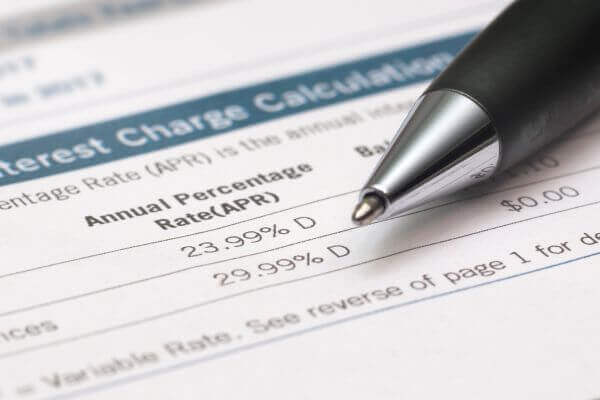
You can find your card’s exact APR in the so-called “Schumer Box” on your monthly statement or in your initial credit card agreement. The Schumer Box, which is mandated by law, has a standardized format to make it easier to compare rates of different cards.
Let’s say John has a credit card with a 24% APR and maintains exactly $5,000 for a full billing cycle. His daily periodic rate is 0.06575% (23% ÷ 365). Over a 30-day billing period, John will have $98.63 in interest charges ($5,000 × 0.06575% × 30). If he pays $100 to his cardholder, only $1.37 goes toward paying off his principal balance. The other $98.63 pays off the interest charge.
If you need help to figure out how best to pay off what you owe on credit cards, use this debt consolidation calculator to give you more insight.
What Is Considered a Good Interest Rate in 2025?
As we mentioned earlier, credit card rates go up and down based on U.S. market conditions. When the Federal Reserve Bank raises rates, credit card rates usually follow. Same as when the Fed lowers rates.
It’s important to know that interest rates on credit cards are not solely dependent on current market conditions. Your credit profile largely dictates how lenders view you as a potential customer, and they’ll set rates based on your credit history, your current credit score and current income situation.
In 2025, any interest rate below 20% is good. Anything under 12% is excellent.
When you’re shopping for a credit card, it can pay off to start with credit unions. They often offer more competitive rates than major banks and credit card companies.
For instance, many credit card companies offer APRs ranging from 19.24% to 29.24% for cash-back cards. Some credit unions have cards as low as 10.99% up to 18.0%. If you join a credit union, you gain access to other low-interest borrowing, such as for car loans and mortgages. Being a credit union member is usually a wise strategy.
If you’re looking for balance transfer credit cards, pay attention to the length of the card’s 0% promotion. It’s typical to find cards with 15 months at 0%, but some lenders offer 21 months or longer. If you are disciplined about paying, you can save yourself significant money by paying off your balance before the 0% promotion ends.
Why Is My Credit Card Interest Rate So High?
If you have a credit card with a high interest rate, chances are it’s because of one or more missed payments, a series of late payments or a low credit score. These are the most common reasons for a poor interest rate.
You could also be carrying the wrong type of card. For example, reward cards, such as those that generate airline points or hotel points, typically have higher interest rates. And if you’re carrying a higher balance on any credit card month over month, you’re paying a higher interest rate than you would if you transferred the balance to a no-interest balance card.
In addition to the typical causes of a higher interest rate on your card, you also could have incurred a penalty APR, or penalty interest rates. This is an interest rate hike from a lender that happens in the wake of late payments or lack of payment.
Such a hike is similar to one you will see on a zero-interest balance transfer card if you fail to pay off your balance in the time allotted.
When you shop, make sure to look for fixed-rate credit cards. They’re harder to find, and many of the top lenders don’t provide them. Plus, they usually don’t have rewards or perks attached to them. But they deliver a lower APR, fewer fees and plenty of predictability. Their interest rates won’t fluctuate with the economy.
Despite all of this, however, there’s good news. Call your credit card company if you feel you’re stuck carrying a card that you got when your credit history was sub-par and now you have a much better history. There is a chance you can get better terms.
Just as a credit issuer will extend more credit — usually in the form of a higher credit limit — some companies will lower the interest rate on your card if you ask. This is especially true if, during the conversation, you let the company know that you’re shopping around for cards with better terms.
If you’ve used this particular high-interest card for a long time — say, 10 years or more — then your leverage is tricky. If the company won’t give you better terms, you can secure a different card that meets your requirements. However, don’t cancel your original card! Closing a long-established credit card that you consistently paid on time can damage your credit score. So, tread lightly.
Credit Card APR vs. Interest Rate: What’s the Difference?
Although APR is a key number for any credit card, it’s not the same as an interest rate. The difference? An interest rate shapes the cost of using (borrowing money on) your credit card. APR includes that interest rate but also any fees and extra costs of the card (such as membership fees, late fees, etc.)
As a consumer and cardholder, you should also know when the grace period on your card ends. A grace period is the time between the date that a billing cycle ends and the date your payment is due. That period can be 14-30 days, but for many cards the time frame is somewhere in between.
Knowing your card’s APR and grace period is important for any credit cardholder.
How to Qualify for a Lower Credit Card APR
To qualify for a lower credit card APR, you must have a better credit score and credit history than you do now. That will take a little time, and maybe more than a little, depending on your situation.
The actions you need to take usually involve reducing your debt and making consistent on-time payments on any credit cards, loans and mortgages. Let’s dig into specifics.
Here are Tips to Qualify for a Lower Credit Card APR:
- Get a personal loan to pay off a credit card: Consider securing one personal loan to pay off all your credit cards in full. A loan should come with a lower interest rate and fixed-interest payment terms.
- Get a zero-balance credit card and transfer your other credit card balances to that no-interest card. Then, pay off your balance before the zero-interest period expires.
- Consider a low-fee or no-fee debt consolidation with a reputable debt manager.
- Borrow against the equity in your home to pay off your credit card balances.
- Work with a credit counseling nonprofit to get your credit card balances under control.
Once you take advantage of some or all of these tips, you can reduce your credit card interest rates.
Sometimes, you can benefit from fortunate timing when the country’s prime rate goes down. The U.S. Federal Reserve Bank meets monthly to discuss the key interest rate, which is the benchmark for all U.S. lending. Mortgage rates, home equity loans, car loans and personal loans all fluctuate when the Fed raises or lowers the prime rate.
This fluctuation includes credit card rates, especially the rates for getting cash from your credit card account. If you pay attention to the news and see that the Fed has dropped the prime interest rate several times over a few months and you don’t hear anything from your credit card company, consider calling the company to ask for a lower rate.
If you have been making consistent on-time payments, your request will have some heft behind it.
Types of Credit Card APRs You Should Know
When you decide to apply for a new credit card, consider all the offers that companies provide. Many credit lenders present 0% APR cards as part of an introductory offer. And these intro offers come in varying lengths (typically 12-21 months).
Educate yourself on the different card products that are on the market. And make sure you understand the key terms of being a credit cardholder.
Key Credit Card APRs to Know:
- A purchase APR is the amount of interest you pay on products and services you buy with your credit card and then don’t pay off the full balance when the bill is due. In these situations, you’re effectively financing all the items you bought with your card. This is not a good use for your money.
- A balance transfer APR is the interest rate that a credit card company applies to your account when you transfer money from one credit card to another. These rates are often lower than others related to the card because companies want to encourage consumers to move other debt to them. Why? Because it often makes them more money.
- A cash advance APR is the rate that lenders charge you when you leverage your account for instant money, such as paying for an emergency. Interest rates for cash advances are usually higher than rates for balance transfers or purchases.
- You should also know about a penalty APR. This is the interest rate credit lenders assess when you violate one of the key terms and conditions related to repayment. That can mean a late payment, a failure to pay or a payment below what the listed minimum payment is for that month.
- An introductory APR, or intro APR, is the interest rate that banks offer to win your credit card business.
It should go without saying that you want to avoid a penalty APR at all costs. That’s because penalty APRs can affect other aspects of your credit card agreement, and your overall APR could max out.
The purchase APR is also key, because that’s going to represent most, if not all, of the debt that hits your credit card account. Make sure your purchase APR is at or below the midpoint of the national APR.
You can also leverage balance transfers to buy yourself time if you hit a cash flow issue. But before you go this route, weigh a balance transfer vs. a personal loan. If you even think you might have a problem paying off the full amount of the balance transfer within the stated payoff period, investigate the terms you can get for a loan. A loan might give you a longer payoff period with less weighty penalties.
Introductory APRs are all wonderful. Terms are almost always better than a normal credit card on the market. But beware the fine print. Know whether you must start paying on that card within the first 30 days to avoid interest charges or whether you can carry your full balance for several months without a penalty kicking in. Also, look for a card that gives you the longest introductory period. That will buy you more payoff time.
Best Practices for Managing Credit Card Interest
You may run into a time when you can’t avoid carrying a balance on your credit cards. Your issue then becomes one of managing interest charges.
The first order of business is to take stock of each credit card account and know its rules. Start by reading the terms and conditions and pay special attention to the monthly closing date (which should be the same every month).
Also note the cards’ grace period, which tells you how much time you have between the end of the monthly charge period and the date your payment is due. If you have multiple credit cards and want to spread out when your payments are due, you can call your creditors and ask them to move those dates.
It’s one way to budget your monthly outflow of money, and it’s typically easy to do. It will help you effectively manage credit card debt and not carry damaging balances and avoid interest on credit cards.
Of course, the best way to control your interest balance is to minimize use. If you can, don’t use those credit cards. If that’s unavoidable, limit your use. And once you find yourself back to a no-interest environment, continue those limited-use habits.
Make yourself a more responsible credit-card user. Read the terms and conditions of all your cards. Pay off your credit cards each month to avoid future interest charges.
FAQs About Credit Card Interest Rates
Here are some commonly asked questions about credit card interest rates:
What’s a good APR for beginners?
Beginning credit cardholders are unlikely to get approved for rates below 15%, making a good rate one that falls between 18% and 22%. In 2025, APRs range from 10.99% to 29.44%, with the best interest rates being offered by credit unions.
How do I check my card’s interest rate?
You can check your credit card’s interest rate by looking at the Schumer Box on your monthly statement. Every credit card statement has a standardized Schumer Box, which lists the various APRs that lenders are currently charging. These include purchase APRs, cash advance APRs and balance transfer APRs.
Can I request a lower APR?
You can request a lower APR from your creditor at any time. But requesting and receiving are not assured. If you pay your credit card bill on time and have a good to excellent credit rating and credit history, you’re more likely to get a lower APR.
Does carrying a balance hurt my credit?
Carrying a monthly balance on your credit cards will hurt your credit because you will amass interest charges and possible late fees. Carrying too large a balance relative to your credit limit and monthly income is one of the signs you have too much credit card debt.
Bottom Line: What Makes a Good Credit Card APR?
A high credit score, a solid credit history and a track record of paying off your credit cards in full every month make for a good (or excellent) credit card APR.
It helps to understand the terms and conditions of each credit card you use and to know at least two key pieces of information: the various APRs and the grace periods. This information can help you budget your monthly income and pay your credit cards on time.
A good APR in 2025 is one between 16%-22%. Rates of 13%-18% are excellent APRs. Average credit card rates for 2025 range from 20% to 24%.
If you find yourself unable to manage your credit card balances effectively, consider enrolling in a Debt Management Program (DMP). A structured DMP can help you get your credit cards paid off within 3-5 years and, eventually, build back your credit rating.
You can also consider debt consolidation, a process in which you secure a personal loan to pay off your credit cards up front and start paying off the loan. This method should significantly lower interest charges.

Sources:
- N.A. (2025, May 29) What Is a Good Credit Card APR? Retrieved from https://www.discover.com/credit-cards/card-smarts/good-interest-rate/
- Coleman, E. (2025, August 18) What Is The Average Credit Card Interest Rate This Week? August 18, 2025. Retrieved from https://www.forbes.com/advisor/credit-cards/average-credit-card-interest-rate/
- N.A. (2025, April 29) Credit card interest: How it works and how to calculate it. Retrieved from https://www.capitalone.com/learn-grow/money-management/calculate-credit-card-interest/
- N.A. (2025, April 10) 5 Strategies for Paying Off Credit Card Debt. Retrieved from https://www.bairdwealth.com/insights/wealth-management-perspectives/2022/08/5-strategies-for-paying-off-credit-card-debt/
- Drechsler, I, Jung, H. et al. (2025, March 31) Why Are Credit Card Rates So High? Retrieved from https://libertystreeteconomics.newyorkfed.org/2025/03/why-are-credit-card-rates-so-high/
- N.A. (2025, February 26) Why Is My Credit Card APR So High? Retrieved from https://www.navyfederal.org/makingcents/credit-debt/why-is-my-credit-card-apr-high.html
- DeNicola, L. (2025, February 25) What is a Good APR for a Credit Card? Retrieved from https://www.experian.com/blogs/ask-experian/what-is-a-good-apr-for-a-credit-card/
- H.H. (2025, February 17) What is a Good APR for a Credit Card? Retrieved from https://www.edvisors.com/credit-cards/credit-card-faqs/what-is-a-good-apr-for-a-credit-card/
- N.A. (2025, January 24) How to Avoid Interest on a Credit Card. Retrieved from https://www.discover.com/credit-cards/card-smarts/how-to-avoid-credit-card-interest/
- DeNicola, L. (2024, February 5) Are Credit Card Rates Fixed or Variable? Retrieved from https://www.experian.com/blogs/ask-experian/are-credit-card-rates-fixed-or-variable/
- N.A. (2024, Jan. 22) How does my credit card company calculate the amount of interest I owe? Retrieved from https://www.consumerfinance.gov/ask-cfpb/how-does-my-credit-card-company-calculate-the-amount-of-interest-i-owe-en-51/
- Luthi, B. (2023, April 6) How Does Credit Card Interest Work? Retrieved from https://www.experian.com/blogs/ask-experian/how-does-credit-card-interest-work/
- N.A. (ND) What is purchase APR and how to avoid it. Retrieved from https://www.chase.com/personal/credit-cards/education/basics/what-is-purchase-apr
- N.A. (ND) What is a cash advance APR? Retrieved from https://www.chase.com/personal/credit-cards/education/interest-apr/what-is-cash-advance-apr